Program
Eleven days, in two components
December 14 – 24, 2026 at The Hong Kong Polytechnic University. Four days of hands-on engineering, then seven days of symposium, exhibition, and cross-border matchmaking. The two run back to back, so the prototypes built in the first component are what the exhibition shows.
December 2026
11 days
Workshop · Dec 14–17
Assembly, sensors, block-based programming
Symposium · Dec 18–24
Keynotes, papers, exhibition, lab tours
Structure
The two components
Hands-on Training & Engineering Workshop
- Dates
- December 14 – 17, 2026
- Length
- 4 days
Block-based programming and custom visual interfaces remove the heavy-coding barrier, so a team can reach a working robot without first learning a text language.
Who it is for: Cross-border student teams
Core Symposium & Cross-Border Exhibition
- Dates
- December 18 – 24, 2026
- Length
- 7 days
Keynotes, peer-reviewed presentations, the prototype exhibition, funding matchmaking, and PolyU lab tours, closing with the 2027 alliance cycle.
Who it is for: Faculty researchers, student teams, and industry partners
Component 1 uses block-based programming rather than a text language. HCR is a free browser simulator built on the same approach: a five-joint arm driven by blocks, with a digital twin checking each move. Teams can practise on it before arriving.
Keynotes
Keynote speakers
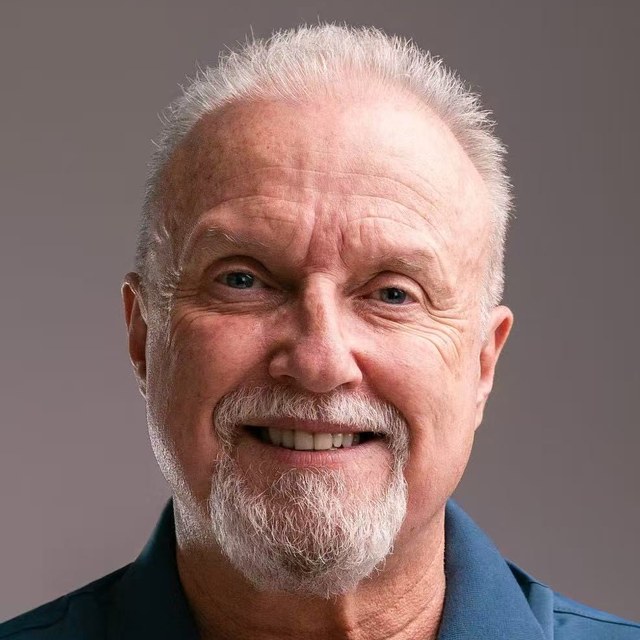
Prof. Hélio Lemes Costa
Federal University of Alfenas (UNIFAL-MG) · Brazil
Tenured Professor of Innovation, Technology, and Information Systems
His work bridges academic research with practical ecosystem development across artificial intelligence applications, radical governance frameworks, process automation, and robotics.
Prof. Hélio Lemes Costa is a Tenured Professor of Innovation, Technology, and Information Systems at the Federal University of Alfenas (UNIFAL-MG), Brazil.
He holds a PhD in Production Engineering (Innovation & Technology) from UFSCar, and master’s degrees in Media & Knowledge (UFSC) and in Innovation & Entrepreneurship (ENEB).
He acts as an instructor at the National School of Public Administration (ENAP) and serves on the board of the Porto Inovação tech park. He is also a co-founder and managing partner of NexGen Brazil Innovation Consulting Office and of agtech ventures including AgFood.ventures.
- Tenured Professor, Federal University of Alfenas (UNIFAL-MG)
- Instructor, National School of Public Administration (ENAP)
- Board member, Porto Inovação tech park
- Co-founder and managing partner, NexGen Brazil Innovation Consulting Office
- Co-founder and managing partner, AgFood.ventures

Prof. Afia Mirza
KNR University of Health Sciences · India
Associate Professor
Her keynote takes the clinical side of service robotics: what a healthcare robot must get right at the bedside, where safe contact and a clean handover to a clinician outweigh raw capability.
Prof. Afia Mirza is an Associate Professor at KNR University of Health Sciences, India, and a senior consultant ophthalmologist. She holds both appointments at once: she teaches in a health-sciences faculty and she sees patients.
That practising side is why the keynote is on the programme. The robots built during the workshop are meant for service settings, and a clinician can say which of their behaviours would be accepted at a bedside and which would not — a judgement the engineering track cannot make on its own.
She also sits on the organising committee as a Co-Chair.
- Associate Professor, KNR University of Health Sciences, India
- Senior Consultant Ophthalmologist, India
- Co-Chair, JHM-SRAS 2026
Day by day
The eleven days in order
The proposal groups the days in pairs. Each date is given a row of its own here, with its pair shown alongside it.
Day 1
Dec 14
Mon · Workshop
Day 1–2 · Assembly
Modular hardware assembly
Teams form across the three regions and build the low-cost robotic arm from modular parts. No prior hardware experience is assumed.
- Team formation and kit hand-out
- Modular assembly of the robotic arm
- Joint calibration and safety briefing
Day 2
Dec 15
Tue · Workshop
Sensor integration
Sensors are added to the assembled arm and verified against the bench, so that later software work runs on hardware known to be sound.
- Tactile and positional sensor integration
- Wiring, power, and bench verification
- First end-to-end motion test
Day 3
Dec 16
Wed · Workshop
Day 3–4 · Software
Software deployment on pre-built simulation cores
Pre-built simulation cores are deployed to each team, and the block-based environment is connected to the arm built in the first two days.
- Deployment of the pre-built simulation core
- Block-based programming environment
- Visual GUI walkthrough
Day 4
Dec 17
Thu · Workshop
Logic pipelines for tactile service scenarios
Teams configure logic pipelines for real-world tactile service scenarios (precise positioning and safe interaction), and leave with the prototype they will exhibit on Day 7.
- Precise positioning pipelines
- Safe interaction constraints
- Prototype freeze for the exhibition
Day 5
Dec 18
Fri · Symposium
Day 5–6 · Opening & academic tracks
Opening ceremony and Edge AI keynotes
The symposium opens with the alliance institutions on stage, followed by keynote speeches on Edge AI for service robotics.
- Opening ceremony
- Keynote speeches on Edge AI
- Alliance welcome reception
Day 6
Dec 19
Sat · Symposium
Paper presentations and research panels
Peer-reviewed papers are presented in parallel tracks, closing with panel discussions that set the questions the rest of the week returns to.
- Peer-reviewed paper presentations
- Parallel academic tracks
- Research panel discussions
Day 7
Dec 20
Sun · Symposium
Day 7–8 · The Tech Exhibition
Student prototype showcase opens
The exhibition floor opens to the working robotic prototypes built during the workshop. Each team demonstrates on its own hardware, not on slides.
- Exhibition floor opens
- Live prototype demonstrations
- Judging round one
Day 8
Dec 21
Mon · Symposium
Cross-border exhibition and industry viewing
The second exhibition day brings industry visitors and remote member labs onto the floor through the hybrid stream.
- Industry and public viewing
- Hybrid stream for remote member labs
- Judging round two
Day 9
Dec 22
Tue · Symposium
Day 9–10 · Synergy & lab tours
Matchmaking for joint funding applications
Structured matchmaking sessions pair investigators across Jiangsu, Hong Kong, and Macao around joint-university funding calls.
- Funding matchmaking sessions
- Joint proposal drafting clinics
- Student mobility briefing
Day 10
Dec 23
Wed · Symposium
Research lab tours at PolyU
Delegations visit PolyU research laboratories, so that a collaboration proposed on Day 9 has been inside the facility it would use.
- PolyU research lab tours
- Facility and equipment briefings
- Partner lab introductions
Day 11
Dec 24
Thu · Symposium
Day 11 · Closing
Reflection, awards, and the 2027 cycle
Interactive reflection forums, the awards ceremony for the student prototypes, and strategic goal-setting for the 2027 alliance cycle.
- Interactive reflection forums
- Awards ceremony for student prototypes
- Strategic goals for the 2027 alliance cycle
Session times, room allocations, and the paper track schedule are published once the submission round closes. The dates above are the tentative dates carried in the alliance proposal.
Participation
Who is in the room
Student teams
Undergraduate and postgraduate teams from across the three regions. The workshop assumes no prior hardware experience, and the block-based environment removes the text-coding barrier.
Faculty researchers
Presenters, panellists, and lab hosts from the member universities, plus the reviewers who assess the submitted papers.
Cross-border tech innovators
Industry participants join the exhibition days and the matchmaking sessions, where joint funding applications are drafted.
150–200 participants are expected in total. Remote member labs can follow the symposium through the hybrid virtual stream.